**IMPORTANT PARK NOTICES**
⚠️ Always monitor weather reports and ocean conditions before your park visit.
•
[O’AHU] UPDATE 3/20/26
Due to severe weather conditions, all State Parks on the islands of Oʻahu will be closed effective immediately Friday, March 20, 2026, through at least Sunday March 22, 2026. This closure includes all camping, hiking trails, halls, pavilions, and planned events to ensure the safety of the public. Closures will remain in effect until damage assessments are completed.
•
[MAU’I] UPDATE 3/19/26
Waiʻānapanapa State Park : Waiʻānapanapa State Park remains closed to parking, park entry, tent camping, campervan camping, and all cabin reservations. All reservations from Monday, March 23 through Sunday, March 30, 2026, have been cancelled, and closures will be extended as needed based on current conditions with no electricity, and water restrictions.
Polipoli Spring State Recreation Area: Polipoli cabins and camping areas are closed until further notice due to storm impacts on access road.
Iao Valley State Monument: Closed till March 30, tentative date to re-open on March 31st.
Makena Beach State Park: Open for business.
•
[KAUAʻI] UPDATE 3/18/26 - The Kalalau trail will be open tomorrow morning, 3-19-26.
•
[HAWAI’I] UPDATE 3/18/26
East Hawaii – All parks open
West Hawaii:
Kealakekua State Historical Park – Open
Manuka Wayside – Open
Kekaha Kai (Manini Owali & mahai’ula Sections) – Park Open / Water Clear
Kiholo State Park Reserve – Camping Closed due to hazardous trees above campground *Waiting for Contractor to respond / Day Use is open to the public.
Hapuna/Waialea SRA – Park Open / Water clear
Lapakahi State Historical Park – Park Open to look out / Trails closed to debris and water bar damage.
•
[KAUAʻI] UPDATE 3/16/26 - Polihale State Park closed until further notice due to mud and debris removal. Pāʻulaʻula State Historic Site closed for construction. Kōkeʻe State Park, Waimea Canyon State Park, and Wailua River State Park is open. Hāʻena State Park - Day use and overnight campers allowed to enter for the day. Overnight campers not allowed to go past Hanakapiai Valley, only to Hanakapiai Falls. A sign will be posted on the trail after Hanakapiai beach heading to Kalalau.
•
[HAWAIʻI] UPDATE 3/5/26 – ʻAKAKA FALLS STATE PARK: Dept. of Water Supply shut off water in the area until further notice affecting the park.
•
[O‘AHU] UPDATE 3/4/26 - KA‘ENA POINT STATE PARK, MOKULE‘IA SECTION, VEHICLE ACCESS GATE [UPDATE 3/12 - temporarily closed due to storm]. You need the 2026 Gold decal adhered to the rear of your vehicle to enter the park, the accompanying permit account provides access to the gate combination online. The 2024-2025 Purple decals are no longer valid. Apply for a 2026 Kaʻena Point Vehicle Access Permit here. All applicants must create a NEW account and apply as a new applicant. We are experiencing significant delays in processing, we appreciate your continued patience. Vehicle access dirt road repairs are occurring to stabilize severe erosion, and armor problem areas with aggregate to reduce erosion and puddling, and improve road stability.
•
[KAUAʻI, OʻAHU, HAWAIʻI] 2/10/26 – Wailua River State Park (Kauaʻi), Ahupuaʻa ʻO Kahana State Park (Oʻahu), Kealakekua Bay State Historical Park (Hawaiʻi): All commercial kayak operators must apply for a Rental Vessel Special Use Permit – Commercial Application, each kayak vessel requires a registered decal. Visit State Parks Permits page here and download and mail in the Rental Vessel Special Use Permit – Commercial Application.
•
[ALL ISLANDS] UPDATE – 12/12/25: Camping - Reservations for February 1, 2026 and beyond available at https://explore.ehawaii.gov, please create an account on Explore Outdoor Hawaiʻi to make a camping reservation.
Kaʻena Point Trail
| Trail Length | 2.5 miles |
| Activity | Pedestrian, Biking |
| Difficulty | Moderate |
| Terrain | Open Coastline |
| Elevation Gain | Negligible |
| Park Name | Kaʻena Point State Park |
Description
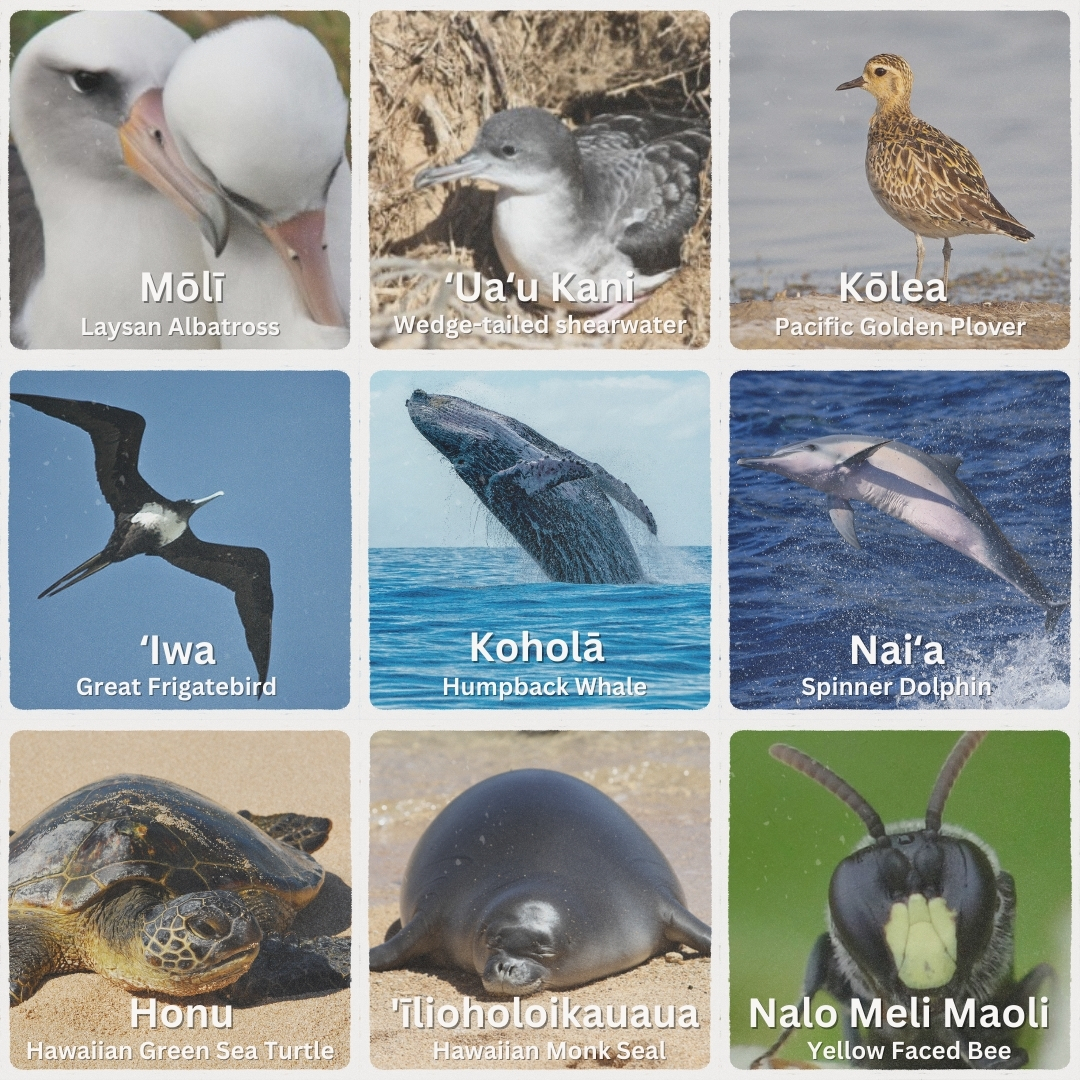
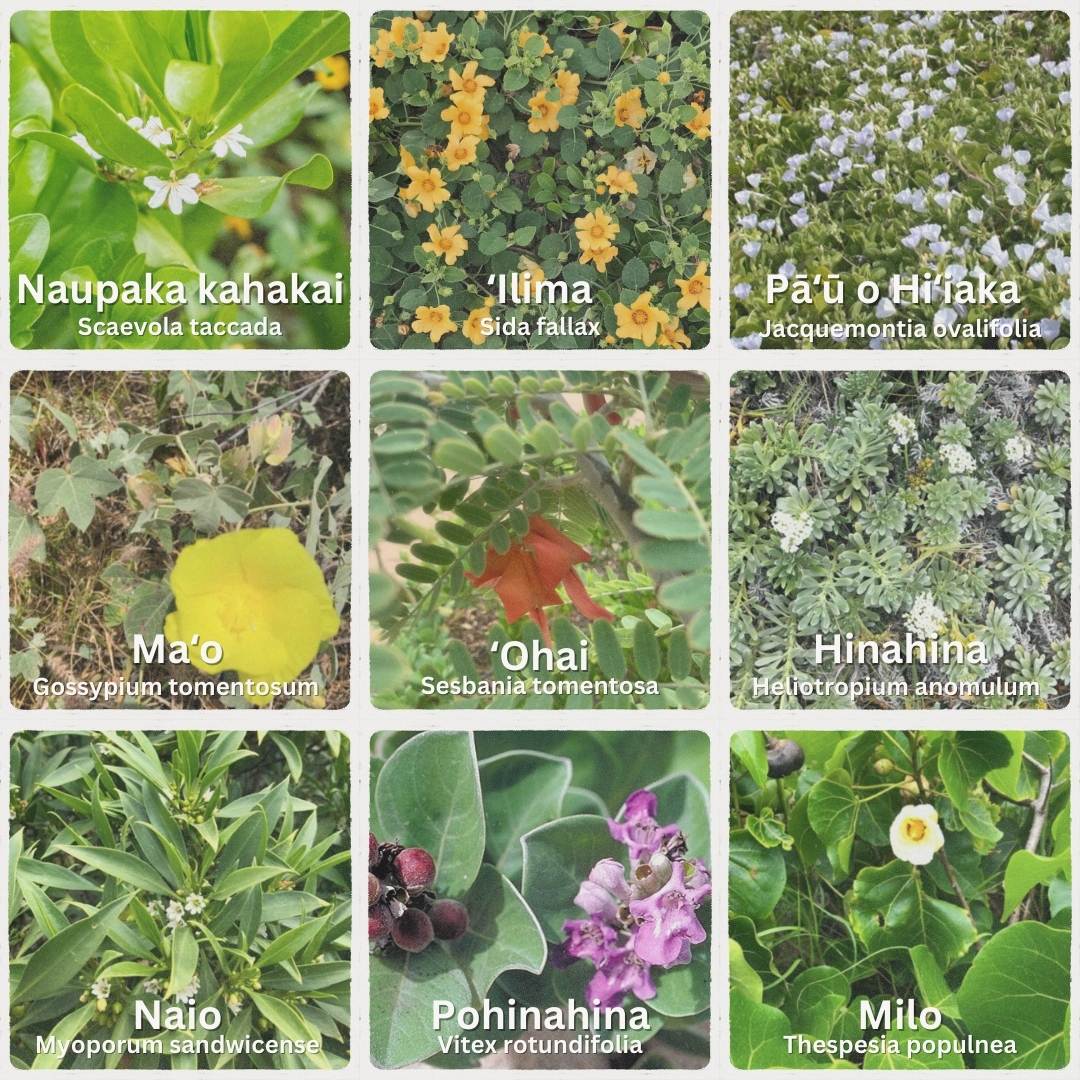
The trail to Ka‘ena Point follows an old railroad bed and former dirt road that ran along the westernmost point of O‘ahu. The trail leads to Ka‘ena Point Natural Area Reserve, a remote and scenic protected area harboring some of the last vestiges of coastal sand dune habitat on the island, and home to native plants and seabirds. Whales frequent this shoreline during the winter months.
The weather is usually sunny and hot, and it can be windy – a hat, sunscreen, and plenty of water are recommended. Allow 1 to 3 hours depending on your pace. Stay away from the wave-exposed coast unless you are familiar with hazardous ocean conditions.
Route
There are two routes to Kaʻena Point. From the Wai‘anae side, take the trailhead at the end of the paved road in the Keawaula Section of Ka‘ena Point State Park and follow the dirt roadway for 2.5 miles to Ka‘ena Point Natural Area Reserve. This route follows the shoreline on your left (southwest), characterized by boulder beaches and occasional tidepools, while cliffs rise above you on your right (northeast). Midway along the trail are a pair of small blowholes. In places the old road has eroded completely.
From the Mokule‘ia side, park at the end of the paved road and follow the dirt roadway for 2.5 miles. The trail traverses a broad, relatively flat coastal plain marked by a raised limestone reef and sand dunes. Upon reaching the Natural Area Reserve, please take care to avoid damaging native flora and watch for nesting seabirds, some of whom make burrow nests. A navigational light is visible at the point. Stay on established paths. No dogs or other animals are allowed in the Park and in the Reserve. To return, retrace your path.
Directions
If you use the Wai‘anae route from Honolulu, take the H1 freeway west, it will eventually turn into Farrington Highway (Route 93). Farrington Highway will become a two lane road at it’s northern end, and terminates at Ka‘ena Point State Park. If you use the Mokule‘ia route, take H-2 to Kaukonahua Road (Route 803) to Farrington Highway (Route 930) past Waialua and go about 1 mile past Camp Erdman. The trailhead on either side of Ka‘ena Point begins where the paved road ends and a rough 4-wheel drive road begins.
Additional Info
- NO ANIMALS ALLOWED IN THE PARK OR KA‘ENA POINT NATURAL AREA RESERVE EXCEPT SERVICE ANIMALS.
- Stay on the trail.
- Pack out at least what you pack in.
- Drones are not permitted.
- No open fires.
Malama Hawaii-Wildlife from Hawaii DLNR on Vimeo.
Some Native Plants & Animals of Kaʻena
Hike & Steward
As you hike Kaʻena Point State Park, keep an eye out for the new Marine Debris Drop-off Stations signs pictured below.
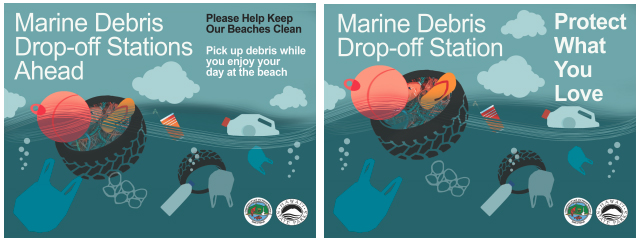 Marine debris consists of man-made objects cast adrift in the ocean, either washed into the water from land-based sources or discarded from vessels at sea. In Hawaiʻi, marine debris drifts in to our waters and comes ashore all year. Marine debris of any size poses a threat to the health and safety of the human population and the fringing coral reef that protects our shorelines. Marine debris may cause entanglement to seabirds, sea turtles, and marine mammals. All marine species could also potentially digest the material.
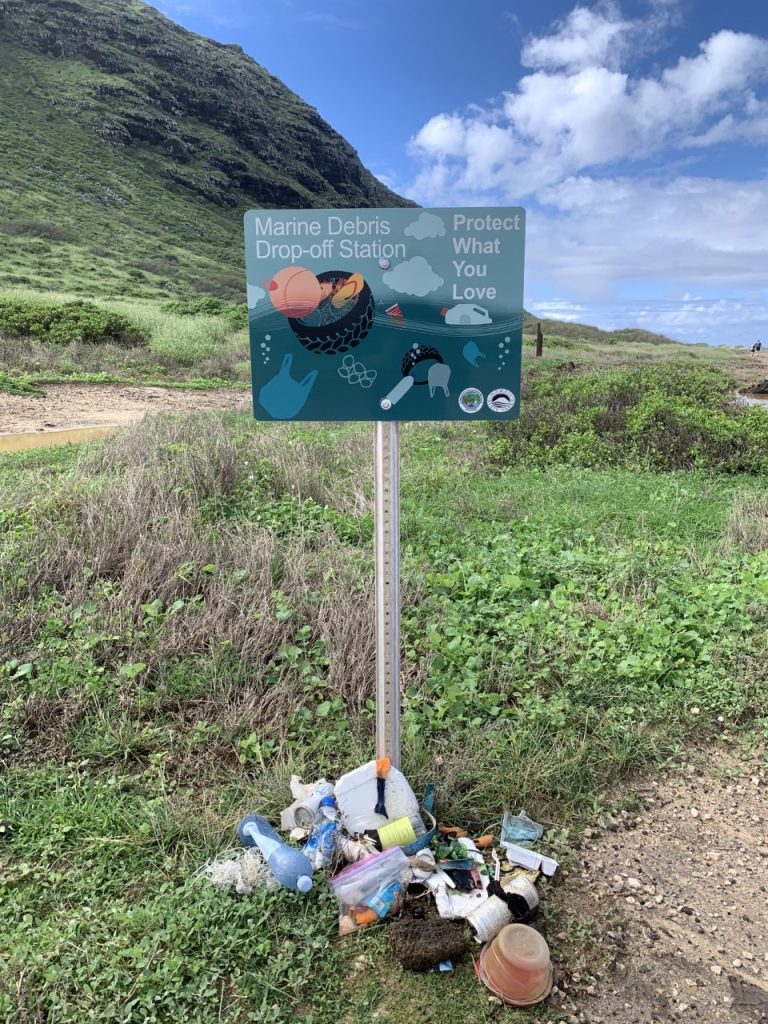
Several signs are visible near the coastal roads and trails. We ask that park users place marine debris found a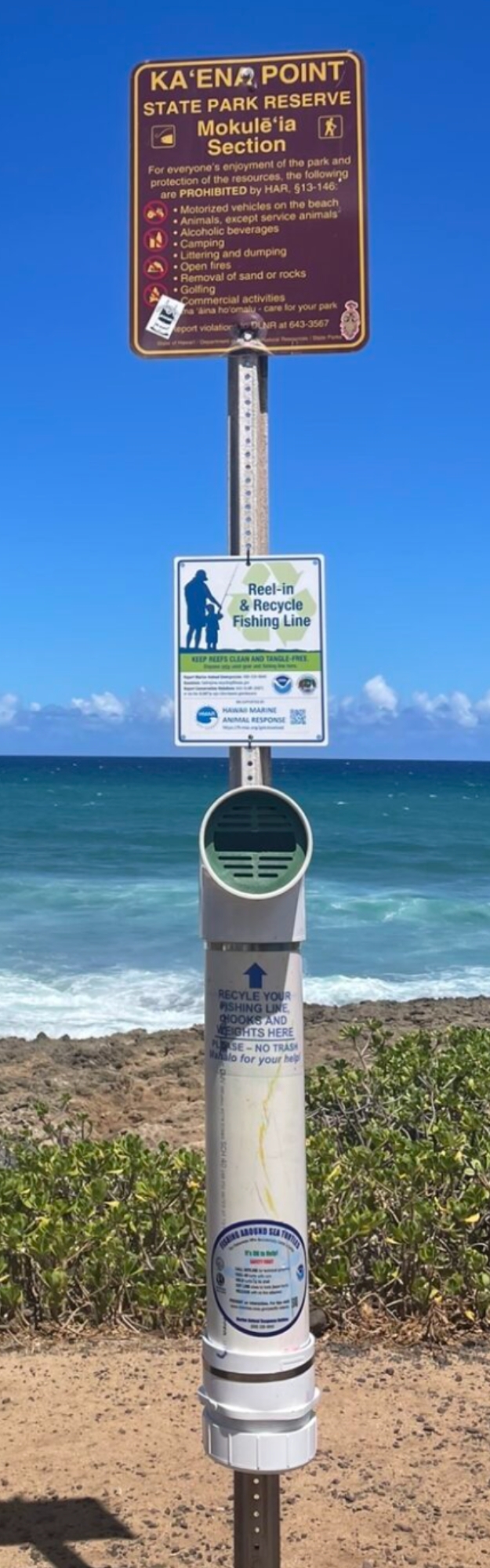 long the shoreline beneath these signs for staff removal, as they serve as Marine Debris Drop-off Stations. Please refrain from leaving trash at these Drop-off Stations, remember to pack out your garbage. As a courtesy reminder, please adhere to all park rules, i.e. no dogs, no drones, no camping.
Kaʻena is traditionally known for its marine resources. Fishers that use the park should properly dispose of their derelict fishing line in the fishing debris collection bins installed in the park by NOAA partner Hawaiʻi Marine Animal Response. The bins are used to collect used line and hooks so that they can be recycled or disposed of properly preventing derelict fishing gear from entering the ocean from the park.
If you would like to get involved and volunteer in the park, scan the QR code or Register As A Volunteer Here.
 Let’s Protect What We Love and mālama Kaʻena Point State Park. Mahalo.
Activities
Facilities
Hazards
Prohibited
Area Weather Forecast